Work In Singapore, Live In JB? Honest Read For Filipino EP and PR Holders Before The RTS Link Opens
Maraming kababayan ang nag-iisip nito kapag bukas na ang RTS Link. Pero para sa Filipino EP / PR holder, ang totoong sagot ay mas komplikado kaysa sa "save money sa rent."
RTS Link is opening in January 2027, a 4-km, 5-minute rapid-transit shuttle from Bukit Chagar (JB) to Woodlands North (SG). With 7-second AI e-gate clearance and S$5–S$7 fares, it's expected to handle 40,000 passengers/day initially, scaling to 140,000/day long-term. Source: Singapore Ministry of Transport.
Once it opens, the math gets very interesting: rent in JB is 40–60% cheaper than rent in SG. Groceries, utilities, food are even cheaper. The "work in SG, live in JB" arbitrage that Malaysians have been doing for decades suddenly looks accessible to a wider audience.
Para sa Filipino EP at PR holder, sulit ba? Mostly hindi, hindi ngayon, at hindi sa paraan na ina-akala ng karamihan. Eto kung bakit.
The honest legal reality first
Hindi pwede ang Filipino sa SG na maglipat-tira sa Johor Bahru on a tourist basis. Tourist visas to Malaysia (Filipinos get visa-free entry for 30 days) are NOT meant for permanent residence. Doing tourist-visa-runs every 30 days to "live" in JB is:
1. Illegal under Malaysian immigration law. Tourist visas explicitly prohibit residence/employment.
2. Caught and tracked. Malaysian Imigresen has computerised entry/exit tracking. Repeated short-stays trigger flags.
3. Punishable by overstay fines (RM30/day), entry bans (1–5 years), and deportation.
4. Risky to your SG work pass too. If MOM finds out you're managing your "residence" via repeated overstaying in MY, your EP status may come under question.
Bottom line: kung gusto mo seryoso tumira sa MY at magtrabaho sa SG, kailangan mo ng tunay na Malaysian residence visa, hindi tourist hopping.
Anong Malaysian visa options ang available sa Filipino?
Required: stay in MY at least 90 days/year cumulative. Aged 25+. Property purchase compulsory within 1 year of approval, can't sell for 10 years.
For a Filipino EP holder earning S$5K/month, MM2H is out of reach for most kababayans unless they have substantial savings or family wealth.
2. **Spousal visa**: niche
If you're married to a Malaysian citizen, you can apply for a Spousal/Long-Term Social Visit Pass that allows residence in MY. This is the easiest path for the small group it covers.
3. **Employment Pass to MY**: different scenario
If you switch from working in SG to working in MY, you'd be working under a Malaysian EP, not commuting. Different lifestyle entirely.
4. **PR application via family / long-term ties**: very rare
PR in MY is hard to get and not designed for this commuter use case.
Different scenarios sa Filipino kababayan
Scenario A: Filipino on SG EP, single, typical income (S$4-7K)
Option to live in JB: effectively closed. MM2H is too expensive; tourist hopping is illegal.
Verdict: stick with SG. Use the JB grocery run for monthly bulk shopping if you want savings.
Scenario B: Filipino on SG EP, married to Malaysian
Option to live in JB:YES, via Malaysian spousal visa.
Action steps: apply for Long-Term Social Visit Pass through Malaysian Imigresen via your spouse's sponsorship. Get the pass. Then live in JB and commute via RTS Link.
Tax implications: continue paying SG income tax (your work is in SG). MY may expect tax declaration if you have MY-sourced income, but pure salary from SG employment usually only taxable in SG.
Scenario C: Filipino on SG EP, dual citizen with Malaysian heritage
Option to live in JB: YES if you have Malaysian citizenship (e.g., from Filipino-Malaysian heritage). You can live in JB without needing a separate residence visa.
Verdict: the cleanest path of all the scenarios.
Scenario D: Filipino with significant savings / high income (S$15K+/month)
Math: RM 600K property is ~S$170K. The fixed deposit is parked, not lost (earns Malaysian bank interest, can be withdrawn after exit). So practical cash outlay is ~S$300-330K, significant but feasible for high earners.
Then: live in JB, take RTS to SG daily.
Scenario E: Filipino on SG PR (Permanent Resident)
Option: SG PR doesn't help with Malaysian residence. You still need MY residence visa via the same paths above.
One advantage: you don't have an SG work-pass cancellation timeline pressure (PR is stable). But the MY-side problem is the same.
Malaysian citizens working in SG who naturally have right to reside in MY, biggest group.
Some Singapore citizens / SG PRs who own JB property as second homes (legal under MM2H or as Malaysian-permitted property purchase).
Some MM2H holders of various nationalities, including a small Filipino contingent, but most are retired or independently wealthy, not working-age commuters.
For working-age Filipinos on EP with typical income, the market hasn't really opened up yet.
RTS Link: practical routes and timing
Once operational (January 2027 target):
Route:Bukit Chagar JB ↔ Woodlands North SG (4 km, 5-minute crossing)
Frequency: trains every 4–10 minutes during peak hours (per LTA / Prasarana plans)
Fares:S$5–S$7 one-way (cross-border tariff, expected to settle)
Immigration: AI e-gates, 7-second clearance target, game-changing vs current 30-90 minute Causeway/Tuas border queues
Operating hours: expected 5am–midnight (similar to other MRT lines)
Approximate end-to-end commute for living-in-JB-working-in-SG
For a JB resident commuting to typical SG work zones:
Work in…
JB-to-MRT door-to-door
Woodlands MRT
~25 min total (RTS + 1 stop + walk)
Orchard / CBD
~50–70 min total (RTS + Thomson-East Coast / North-South line transfer)
Changi Airport / East side
~70–90 min total (RTS + multiple line transfers)
One-North / West side
~60–80 min total
This is roughly comparable to a Singaporean commuting from Punggol to Marina Bay, but with the border-crossing added. Major improvement vs the current 1-2 hour bus/car commute via Causeway.
Cost comparison (assuming you have legitimate MY residency)
For a Filipino EP holder earning S$5,000/month:
Item
Living in SG
Living in JB
1-bed condo rent
S$2,200–3,500
RM2,000–3,500 (~S$600–1,000)
Utilities + internet
S$150–250
RM200–300 (~S$60–90)
Groceries (single)
S$400–600
RM800–1,200 (~S$240–360)
Eat-out + entertainment
S$300–500
RM500–800 (~S$150–240)
Daily transport
S$80–120 (MRT)
RM200 + S$220 RTS (~S$280)
That's S$22K–36K/year potential savings. Substantial, but conditional on:
You qualify for legitimate MY residence (MM2H, spousal visa, etc.)
You're OK with daily border friction even with RTS
You don't lose time/career flexibility from being further from SG
Tax considerations (consult professionals)
Generally:
Income tax: salary from SG employment is taxed in SG. MY doesn't typically tax MY-resident foreigners on foreign-source income (per MM2H rules). Consult a tax advisor, your situation may differ.
Property: if you buy MY property, you pay MY property tax (annual quit rent + assessment). If you also own SG property, SG property tax continues.
Foreign-source income remittance: rules between MY and SG are complex. Don't assume. Get advice.
Disadvantages worth weighing
Visa cost / capital lock-up. MM2H Silver = USD 150K + RM 600K. RM is locked up, USD sits parked.
Property exposure to MY economy. If MYR strengthens, your S$-denominated salary buys less rent over time. If it weakens, you save more. FX risk goes both ways.
Distance from SG community. Lucky Plaza, Filipino-friendly events, mass on Sundays at St. Joseph's, you can still come, but you're an hour-plus away.
Limited time off in SG. Late-night meetings, after-work drinks with colleagues become harder.
Healthcare. SG has world-class care; MY has good care but more paperwork and waiting. If you have ongoing health needs, account for this.
Life events back home. You're now juggling SG-MY-PH (and family in PH may not realise you've added a layer).
RTS Link initial bottlenecks. The first 6–12 months of any new transit line have teething issues. Capacity at peak may exceed plan; AI e-gates may have hiccups.
Practical next steps (if you're seriously considering)
1. Verify your visa eligibility first. Talk to a Malaysian immigration lawyer or accredited MM2H consultant. Don't proceed without confirmed residence status.
2. Calculate your actual savings honestly. Use the table above as a starting point but plug in your specific rent / family setup / lifestyle.
3. Check MOM rules. Some SG employers have restrictions on where their EP staff reside (in case of emergency call-ins). Ask your employer's HR.
4. Visit JB for a test month if your work allows, get a sense of the lifestyle before committing.
5. Wait until the RTS Link actually opens and stabilises (probably 3-6 months post-launch) before relying on it for daily commute.
Verdict for typical Filipino in SG
For most kababayan natin: hindi pa ito ang hack ng-the-decade. The legal residency hurdle is real and expensive. The RTS Link makes the commute easier for those who can already live in MY, but it doesn't change Filipino EP holders' visa situation in Malaysia.
The realistic groups who'll benefit:
Filipinos married to Malaysians
Filipinos with Malaysian heritage / dual citizenship
High-net-worth Filipinos on MM2H
Filipino retirees on MM2H who don't need to commute
For most working-age Filipino EP/PR holders, the smarter move is:
Use SG's CPF, SkillsFuture, and savings infrastructure.
Consider Philippine property as your housing arbitrage (familiar legal + family tie advantages).
Save aggressively for retirement, and revisit MM2H later when you can afford it.
For the small group who CAN do this, the math is real. Just verify the legal foundation first, before signing any lease in JB.
Last reviewed April 27, 2026. Visa rules, MM2H tier requirements, RTS Link timing, fares, and tax treatment all change. Verify directly with the [Malaysian Immigration Department](https://www.imi.gov.my/), [Singapore MOM](https://www.mom.gov.sg/), [IRAS](https://www.iras.gov.sg/), and a qualified immigration / tax professional before making decisions involving residence, property, or large capital commitments. Not legal, immigration, financial, or tax advice.
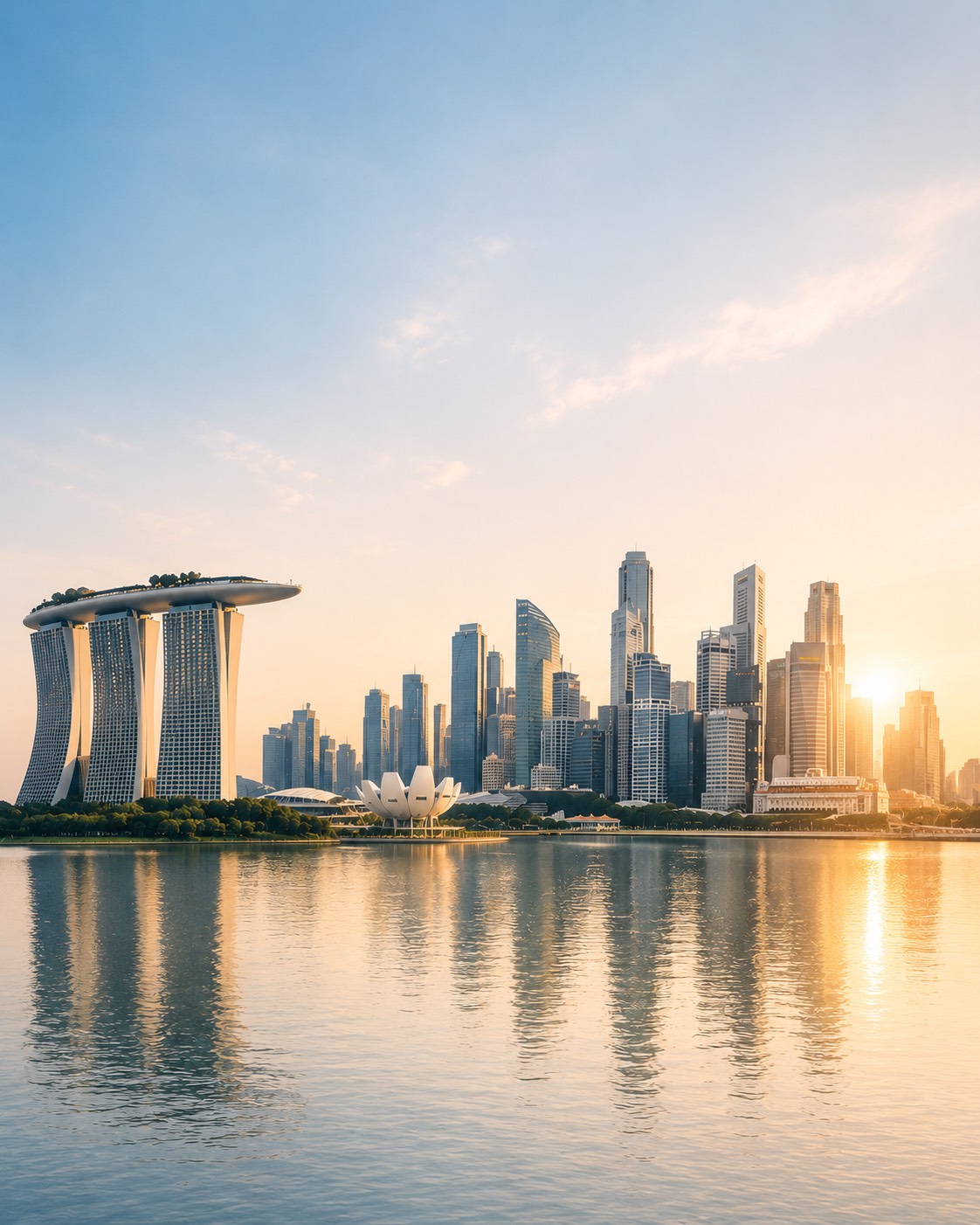
Hero photo: AI-generated illustrative image (Singapore-Malaysia Causeway at dusk with elevated transit infrastructure), produced via Google's Imagen 4 model through the Gemini API.