You smelled it before you saw it. That burnt smell drifting through the window in the morning, and for a second you thought a neighbor left something on the stove. Then you stepped out for the marketing and the sky over the HDB blocks had gone milky white, the sun a dull coin behind it. Your throat felt scratchy by the time you reached the wet market. Amoy usok, and it was not from anyone's kusina.
The haze came back to Singapore this month, kabayan. For a stretch of September the air turned thick and grey, the kind of grey that makes the whole island look like an old photograph. If you spent those days worrying about a scratchy throat, a coughing anak, or a lola with a weak chest, you were not imagining things. The numbers backed you up.
Bakit ganito ang langit
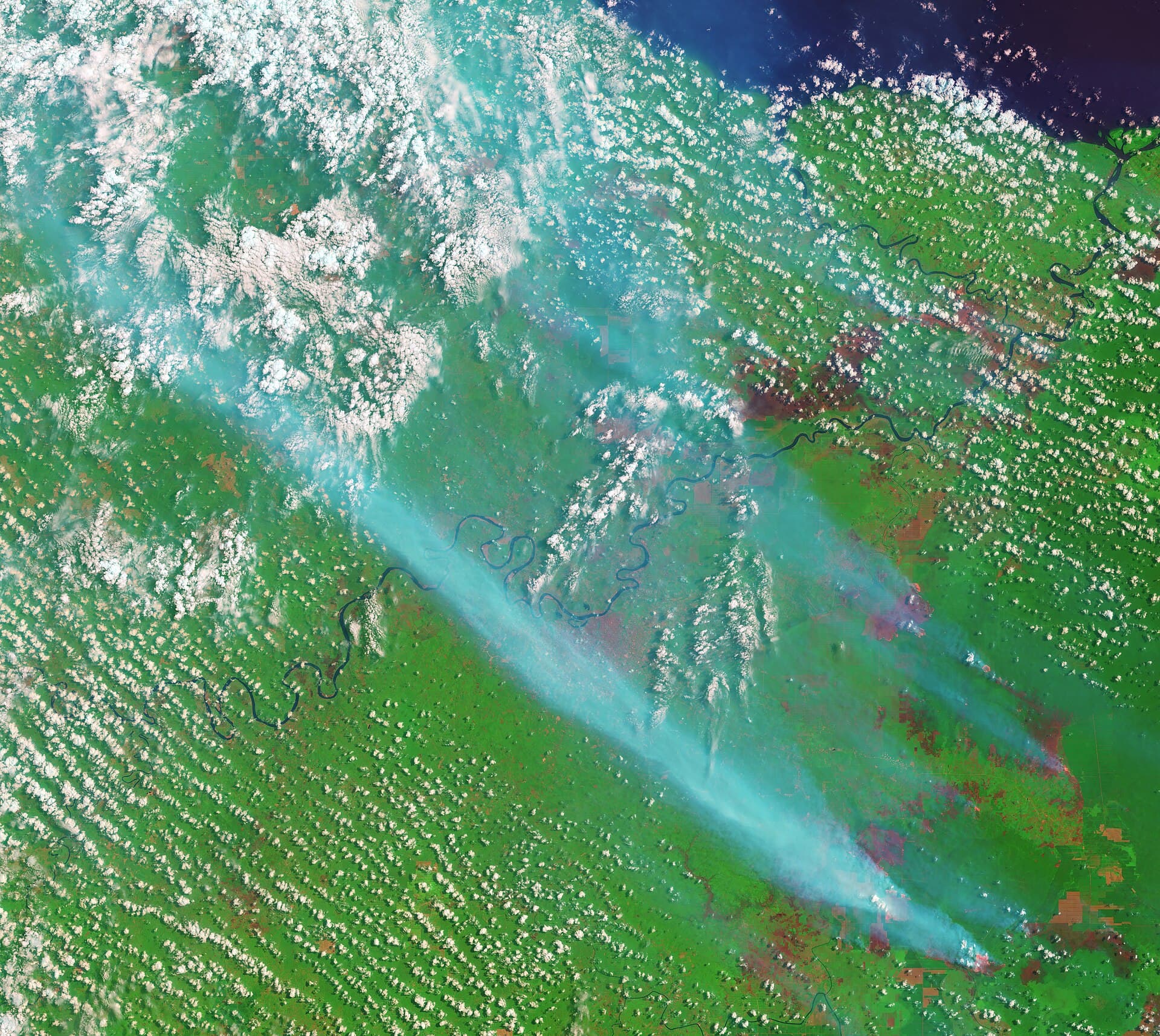
The smoke is not ours. It drifts over from fires burning in Sumatra and Kalimantan across the water, and the wind carries it here through the dry months. Every few years it reaches us, and this September it did again.
Singapore measures the air with something called the PSI, the Pollutant Standards Index. Think of it as a report card for what you are breathing over a 24-hour window. Below 100 sits in the Good to Moderate range, and life goes on as normal. From 101 to 200 the air turns Unhealthy. From 201 to 300 it becomes Very Unhealthy, and above 300 it reaches Hazardous, the point where even healthy people should stay indoors.
This month the reading climbed past 100 for the first time in a while. The National Environment Agency clocked a 24-hour PSI of 145 at midnight on 15 September, well inside the Unhealthy band. Then the wind shifted and the rain helped, and by the evening of 22 September the reading had settled back to between 59 and 77, in the Moderate range, with the agency expecting it to hold there. Better air, for now. The dry season still has a way to go, so the haze can drift back with the next change in wind. Keeping half an eye on the sky through October is a fair habit.
Kung nasa labas ang trabaho mo
This is the part that gets personal, because so many of us work under that sky. The construction kabayan up on the scaffolding. The shipyard workers out at Tuas. The delivery riders weaving through the Orchard crowds. The kasambahay sent out to hang the laundry, walk the dog, and do the marketing while the amo stays in the air-conditioned flat. You are the one breathing the most of it when the air turns.
Advertisement
MOH keeps its advice simple and ties it to the PSI. At 100 or below, normal activities are fine. Once it reaches the Unhealthy 101 to 200 band, healthy people should reduce long or strenuous time outdoors, and the vulnerable groups should cut back more. From 201 to 300, healthy adults should avoid heavy outdoor activity too. Above 300, everyone keeps outdoor time to a minimum.
On masks, MOH is clear that a short trip does not call for an N95. A quick walk from the flat to the MRT or the school gate is fine without one. The N95 matters when the air is bad and you have to be outside for hours at a stretch. For older parents or anyone with a heart or lung condition, MOH says to check with a doctor first before relying on an N95 for long outdoor spells, since the mask makes breathing a little harder. If you brought your parents over for a visit, this is one more reason a travel insurance policy for seniors earns its keep, because one bad turn can mean a clinic visit far from home.
Kailan ka dapat magpadoktor
Most of us will feel a bit of the haze and shake it off. An itchy throat, dry eyes, a light cough. Drink water, rest, and it passes as the air clears. Pay closer attention when it is a child, a senior, or someone with asthma or a heart condition who starts feeling unwell, because for them a cough is not always a small thing. MOH says anyone in those groups who feels unwell should get medical advice rather than wait it out.
If you do need to see someone, you have more options than the hospital, and the cheaper ones are often the right ones. A polyclinic or a neighborhood GP handles a haze cough for a fraction of what A&E costs, and your work-pass medical insurance may cover more than you think. We laid out the real prices in our guide to seeing a doctor in Singapore without the sticker shock, so you know where to walk in before the bill surprises you.
Ano ang gagawin mo ngayon
Start with the app. Download myENV from the National Environment Agency, or check the readings on the NEA website, so you are reading real numbers instead of guessing from the colour of the sky. The PSI updates through the day, and the one-hour PM2.5 band tells you how fast things are moving right now.
At home, close the windows when the air turns and keep the fan going inside rather than pulling in the smoke. Drink more water than usual, since it helps your throat and eyes. Keep a couple of N95 masks in the drawer so you are ready if the reading climbs, and check that they seal tight over the nose and chin. Save your padala errands for a clearer day when you can. And when the reading sits at Moderate, as it is now, you can breathe easier and go about your day. No need to mask up for the walk to the bus stop.
The picture can shift with the wind, so treat any number you read today as a snapshot. For the live PSI and the official health steps, the National Environment Agency and the Ministry of Health are the sources to trust, and MOM's haze pages spell out what your employer owes you at work.
For now the sky over Singapore is clearing, and the coin of a sun is turning back into the real thing. Check the app before you head out this weekend, keep a mask in your bag, and look out for the lolo and lola and the little ones at home. We have breathed through worse together, kabayan. Ingat, and enjoy the fresher air while it lasts.
Satellite image: NASA (public domain), via Wikimedia Commons.
The Ministry of Manpower has rules for this, and they sit on your employer's shoulders, not yours. Under MOM's tripartite guidelines, once the PSI is 100 or below, employers already need to prepare, which means fit-testing masks and keeping a stock of N95s ready. Once the reading enters the Unhealthy range of 101 to 200, employers must cut back prolonged or strenuous outdoor work, rotate jobs, and give indoor breaks. From 201 to 300 the guidance turns firmer: avoid prolonged or heavy outdoor work, and if the work cannot wait, MOM urges the employer to hand out masks. Above 300, employers should keep outdoor work to a minimum, and provide masks or proper respirators when the work cannot wait.
Read that again and notice who pays for the mask. Your employer does. If the air is bad and your boss sends you out for hours of heavy work with nothing to protect you, that is not how the rules should work. For kasambahay, this can feel hard to raise. You do not want trouble in the house. If you ever feel pushed into unsafe work and do not know who to tell, keep the 24-hour helpline for domestic workers saved in your phone. And your employer already carries medical insurance for you by law. That is at least S$60,000 of cover, and you should never pay a cent of it.
Para sa mga bata, matatanda, at buntis
Not everyone breathes the haze the same way. The Ministry of Health flags four groups who feel it first: older folks, pregnant women, young children, and anyone with a chronic lung or heart condition. If your Ma is visiting on a tourist pass, if you are carrying a baby, or if your anak has ever wheezed after a cough, this part is for you.