You are scrolling the group chat on a Sunday, half-listening to your anak play in the next room, and someone posts the question you have been sitting on for months. Paano ko po ipapasok ang anak ko sa local school dito? Forty replies later, nobody agrees, and you close the phone more lost than before.
If your EP or S Pass salary has cleared the line to bring your family over, a local Singapore school is the prize you are eyeing. The teaching is strong, the fees sit far below the international schools that charge two or three thousand a month, and your child grows up beside Singaporean classmates. There is one door into that system for a child who holds a foreign passport, and it carries a name that sounds like a bank code. AEIS.
Who AEIS is for, and who it is not
AEIS stands for the Admissions Exercise for International Students. The name marks the boundary. MOE runs it for children who hold a foreign passport, so it fits most Filipino families here, the ones where nanay or tatay works on an Employment Pass or S Pass and the child lives here on a Dependant's Pass or a Student's Pass.
If your child already holds Singapore PR or citizenship, this is not your road. PR and citizen children enter through the regular school registration that Singaporeans use, and MOE will not let them sit AEIS at all. Settle which passport your child carries before you plan anything else, because it changes the whole route. Our guide on the Dependant's Pass and what bringing family here costs covers the pass side of this.
The levels it can place your child into
AEIS opens the door to Primary 2 through Primary 5, and Secondary 1 through Secondary 3. It skips Primary 1 (that has its own registration exercise) and it skips the graduating years. Your child sits the paper that matches their age, and MOE decides the level and the school from how they do and where seats remain. You do not get to pick the school, which catches a lot of parents by surprise. A seat in a solid neighbourhood school beats an empty wishlist, so most families take the seat MOE gives and settle in.
The two windows, and why September rules everything
There are two chances in a year, and they do not carry equal weight.
The big one is the main AEIS test, held around September. Last year it ran across the first week, from 2 to 4 September 2025, with a different day for each level. Registration for it opens mid-year and closes weeks before the test, so by the time September arrives the door has already shut. If you are reading this in late August, open the MOE page today, because this year's window may be closing as you scroll.
The smaller one is the S-AEIS, the supplementary round. Registration for it starts in January, the test falls in February or March, and children who pass start school around April or May of that same year. It carries a catch. S-AEIS covers only Primary 2 to 4 and Secondary 1 to 2, so a child aiming for Primary 5 or Secondary 3 has the September test as their one shot.
What the test asks of your child
The papers differ by level, and the primary route hides a step that catches families off guard.
For Secondary 1 to 3, your child sits two papers, English and Mathematics, the simpler of the two routes. For Primary 2 to 5, MOE tests Mathematics on test day, but the English side works another way. You submit a Cambridge English Qualifications result with the application, taken from an approved test, and your child has to hit a minimum score before MOE will even accept the AEIS registration. Many parents learn this too late and scramble for an English test slot in the same month everything else falls due. If your anak is primary age, book the Cambridge English test first, months ahead, not last.
Advertisement
One more thing trips up Pinoy kids in particular. Singapore Maths runs ahead of where the same grade sits back home, so a bright child who was near the top in Manila can open the AEIS Maths paper and freeze at topics the class here covered a year earlier. That gap says nothing about your child's ability. It marks a syllabus difference, and a few months of focused Maths practice closes most of it.
What it costs, and how you register
The money side stays small next to what international schools charge. In recent cycles MOE set the AEIS test fee at S$340 for primary and S$630 for secondary, and you pay it when you register. Fees do move, so confirm the current figure on the MOE page before you count on it. If the fees still stretch you, a few Singapore scholarships open to Filipinos can help once your child sits inside the system.
You register online through the SEAB Candidates Portal at myexams.seab.gov.sg. You create an account during the application window, upload your child's birth certificate and the passport bio-data page (valid at least six months), add the Cambridge English result for primary applicants, and pay. Give it time. SEAB says the application can take at least four weeks to move to a Registered status, so do not panic if the screen sits quiet for a while.
If your child is still in the Philippines, one detail bites. MOE arranges no entry permit for a child coming in only to sit the test, so you handle the travel and the visa side yourself, and you check ICA and MOH rules before you book anything.
If the September door already closed on you
Missing this year's main test stings, above all if you found out the timeline only this week. Breathe. It does not end your child's schooling, and rushing a half-ready application helps no one.
Advertisement
Two roads open up. You aim for S-AEIS in the new year if your child fits its narrower levels, Primary 2 to 4 or Secondary 1 to 2. Or you spend the months getting ready for next September, the stronger play for most families, because it gives your child real time to close the Maths gap and sit the Cambridge English test without a rush.
In the meantime your child can stay enrolled at a private or international school, or keep learning at home, while you build the file. Plan backwards from the window instead of chasing it. Every strong AEIS application I have watched come out of our community started six months out, not six weeks.
What could change, and where to check
MOE adjusts AEIS from year to year. The exact test dates shift, the fees can rise, and the Cambridge English requirement for primary applicants has moved around in recent years. Treat this piece as your map of how the exercise works, and treat the MOE AEIS pages and the SEAB Candidates Portal as the source for this year's dates, fees, and forms. Two links to bookmark: the MOE international students section at moe.gov.sg/international-students/aeis, and SEAB at seab.gov.sg. If those two disagree with a tutoring centre's flyer or a group-chat screenshot, the government pages win.
Raising kids far from home carries a weight nobody back in the province quite sees. You are choosing schools in a language of forms and portals, and you are doing it for a child who will grow up with a Singaporean accent and a Filipino heart. That double life is a gift you are handing them, even on the nights it feels like nothing but paperwork.
So take tonight off the worry. Read the MOE page once, put the key date in your phone, and then go watch your anak play. The window will come round again, and you will stand ready for it. If you want to keep their Tagalog alive while they master the local school, our piece on raising Filipino kids here through Buwan ng Wika makes a good next read. For the money side of family life on a Singapore salary, the sweldo breakdown lays out the real budgets.
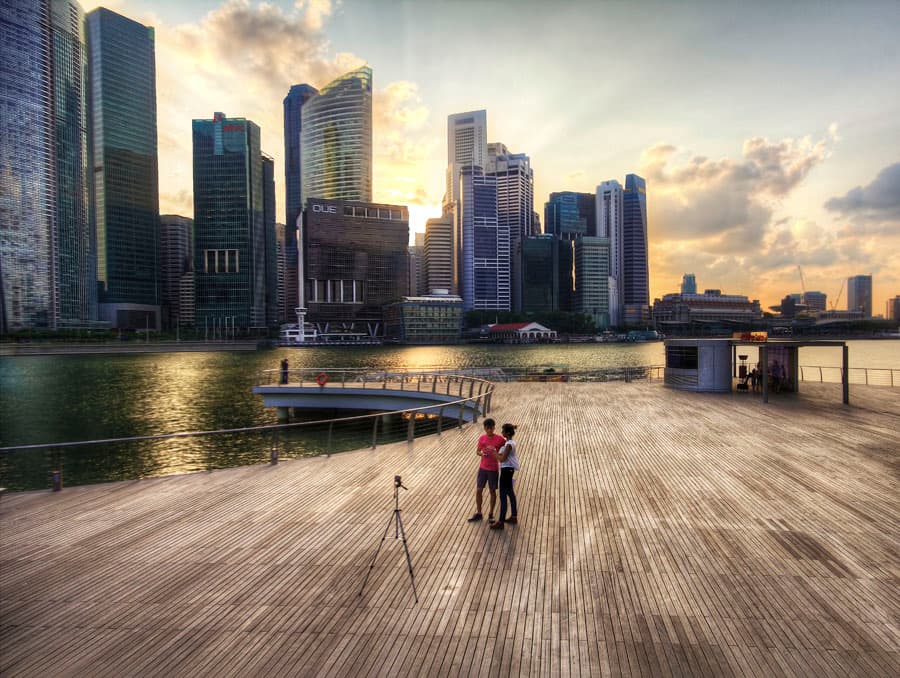
Photo: Sgwikicontributor / Wikimedia Commons, CC BY-SA 4.0